|
|
For over 900 years there has been a Castle at Windsor. William the Conqueror chose the site, high above the River Thames and on the edge of a Saxon hunting ground. It was a day's march from the Tower of London and intended to guard the western approaches to the capital. Since those early days Windsor Castle has been inhabited continuously and improved upon by successive sovereigns. Some were great builders, strengthening the Castle against uprising and rebellion; others, living in more peaceful times, created a palatial Royal residence.
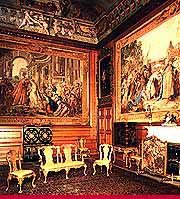
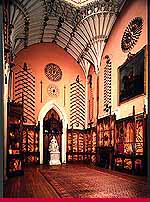
Nine centuries after its foundation, the Castle continues to perform its prime role as one of The Queen's official residences. Pivotal to this role are the State Apartments, which are the formal rooms used for Court ceremonial and State and official occasions. They range from the smaller intimate rooms of Charles II's Apartments to the vast area of the Waterloo Chamber, built to commemorate the famous victory over Napoleon in 1815. The rooms are furnished with some of the most important works of art in the Royal Collection including masterpieces by Rembrandt, Rubens, Holbein and van Dyck as well as magnificent French and English furniture and porcelain. Windsor Castle provides a step back into history and within its Precincts stands St George's Chapel, the resting place of 10 sovereigns. Founded by Edward IV in 1475 and completed by Henry VIII, the Chapel is dedicated to the patron saint of the Order of the Garter, Britain's highest Order of Chivalry, and ranks among the finest examples of late medieval architecture in the United Kingdom. Further information is available about the restoration of Windsor Castle. The Precincts, Queen Mary's Dolls' House, The Gallery, The State Apartments, St George's Chapel and the Albert Memorial Chapel are open to visitors. |
|||||||
    |
||||||||
 |
 |
 |
 |
|
||||