|
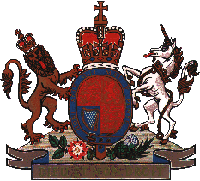 In the official coat of arms the shield shows the various royal emblems of different parts of Britain: the three lions of England in the first and fourth quarters, the lion of Scotland in the second and the harp of Ireland in the third. It is surrounded by a garter bearing the motto Honi soit qui mal y pense (Evil to him who evil thinks), which symbolises the Order of the Garter, an ancient order of knighthood of which the Queen is Sovereign. The shield is supported by the English lion and Scottish unicorn and is surmounted by the Royal crown. Below it appears the motto of the Sovereign, Dieu et mon droit (God and my right). The plant badges of the United Kingdom - rose, thistle and shamrock - are often displayed beneath the shield |
|
|
What is the Royal Coat of Arms?
The function of the Royal Coat of Arms is to identify the person who is Head of State: in respect of the United Kingdom, the royal arms are borne only by the Sovereign. They are used in many ways in connection with the administration and government of the country, for instance on coins, in churches and on public buildings. They are familiar to most people as they appear on the products and goods of Royal Warrant holders.
The Royal Coat of Arms of the United Kingdom have evolved over many years and reflect the history of the Monarchy and of the country - symbols representing England, Scotland and Ireland, the Sovereign's motto and the lion and the unicorn. Wales is featured in the arms of The Prince of Wales. Coats of Arms of members of the Royal family are broadly similar to The Queen's with small differences to identify them.
The Sovereign also has a personal royal cypher used, for example, on royal and State documents and on Post Office pillar boxes. The cypher usually consists of the royal initials surmounted by a crown. Cyphers for other members of the Royal family are designed by the College of Arms and approved by The Queen. |
|








